


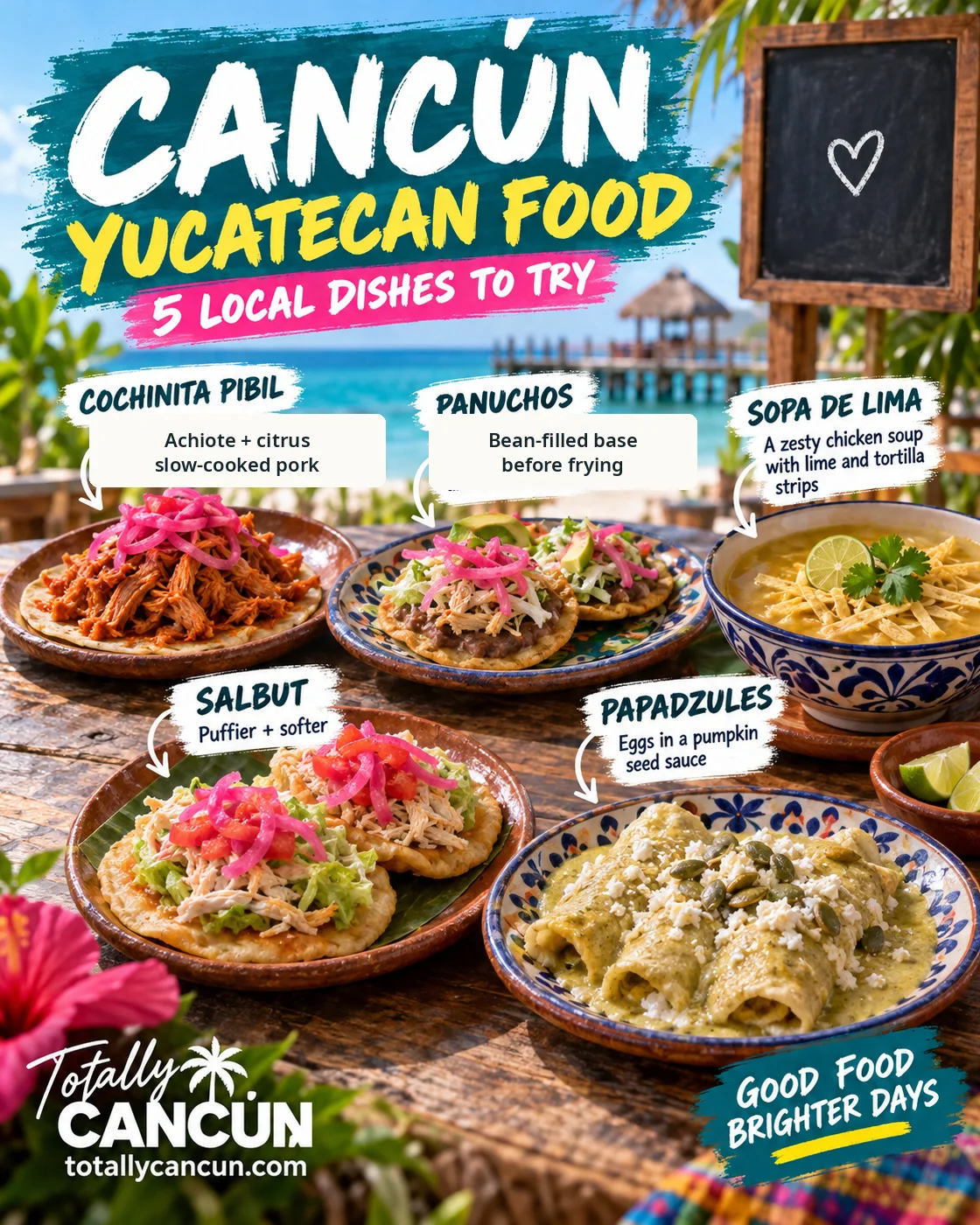
I would not come to Cancún and treat “Mexican food” as one national menu. The Yucatán Peninsula has a strong regional cuisine with Maya techniques, local ingredients and later cultural influences layered together. Yucatán's own tourism and government gastronomy pages still highlight dishes such as cochinita pibil, sopa de lima, panuchos, salbutes, papadzules, relleno negro, poc chuc and queso relleno.
That list is useful, but the better question is why they taste different and where each dish makes sense in a Cancún trip.
Pib is a cooking method, not shorthand for every Yucatecan dish
Pib refers to an earth-oven cooking tradition. Cochinita pibil is the famous example: pork seasoned with achiote and citrus, traditionally wrapped and cooked slowly. During Hanal Pixán, mucbipollo or pib is an especially important seasonal food connected with the observance.
I would avoid the lazy explanation that all regional food is “pit roasted”. The cuisine uses grilling, frying, simmering, recados, tortillas and many other techniques.
Achiote, sour orange and habanero build the regional flavour
Achiote gives many dishes their red colour and earthy spice; naranja agria brings tart citrus to marinades; and habanero adds floral heat. Habanero is powerful, so I prefer it served as a condiment I can control rather than proving anything with the hottest salsa on the table.
Recados — seasoned pastes or spice blends — are another useful idea to recognise. They help explain why a dark relleno negro and a red achiote-based dish can feel related to the same regional pantry while tasting completely different.
Cochinita pibil: start here, but do not stop here
Cochinita is the obvious introduction. In Yucatán it has strong traditional associations, including Sunday eating patterns and Hanal Pixán context in official regional food material. In Cancún you will find it in tacos, tortas and plated meals.
I look for tender meat, clear achiote/citrus flavour and pickled red onion that cuts through the richness. I do not need a dramatic “secret recipe” story to enjoy it.
Panuchos and salbutes are not the same thing
Both are tortilla-based Yucatecan street and market foods, but the base and texture differ. A panucho is typically built around a tortilla with refried beans before frying and topping; a salbut is puffier and softer after frying. Toppings vary.
If you are doing a food crawl, order one of each to compare rather than filling up on four of the first thing you see.
Sopa de lima is the reset button
Sopa de lima is a citrus-scented poultry soup with tortilla elements and regional lime character. After several rich fried or pork-heavy dishes, it is the kind of meal I appreciate because it shows the cuisine is not one continuous wall of heaviness.
Papadzules, relleno negro and queso relleno widen the picture
Papadzules use tortillas with egg and a pumpkin-seed-based sauce; relleno negro gets its dark colour and deep flavour from a charred-spice recado; queso relleno reflects the peninsula's layered culinary history by building a savoury filling around Edam-style cheese.
These dishes are why I prefer a regional restaurant or market fonda over ordering only resort tacos and deciding I have “done Yucatecan food”.
Poc chuc is the grilled option I look for
Poc chuc is associated with grilled pork and sour-orange character, commonly served with accompaniments such as onion, tomato and tortillas. It is a useful counterpoint to slow-cooked cochinita: same regional pantry, different technique and texture.
Markets and fondas are useful tasting grounds
Yucatán's official tourism material describes strong weekly food traditions in markets and fondas. In Cancún, I would use Mercado 23 or Mercado 28 as one possible tasting context, then compare with a dedicated Yucatecan restaurant downtown.
I do not hard-code one stall as “the best”; turnover, cooks and opening days change. Follow current local recommendations and a busy kitchen.
Vegetarian and allergy questions need specifics
Beans, rice, tortillas and vegetables do not automatically make a dish vegetarian or vegan. Broth, lard, egg, dairy and shared cooking surfaces matter. For allergies, name the ingredient rather than relying only on “sin gluten” or “vegano” as a broad label.
PROFECO's current consumer guidance also matters in restaurants: displayed prices should be respected, taxes included, and tipping is voluntary. Ask the food questions and the bill questions before they become problems.
My four-dish starter plan
- First: cochinita pibil for the achiote/citrus/pib story.
- Second: one panucho and one salbut for texture.
- Third: sopa de lima for a lighter contrast.
- Fourth: papadzules, relleno negro, poc chuc or queso relleno — whichever the kitchen is proud of that day.
My verdict
The best Cancún food plan is not a checklist of famous dishes; it is a few meals that let you notice technique, recado, citrus, chile and texture. If all you remember is “cochinita equals red pork”, you missed the interesting bit.
Cheers, Carpe Diem & order one regional dish you cannot explain yet! 🍻⏳🍛
TATS Man
The menu nerd who wants the recado story before another generic taco